When Offstreet was originally built, its purpose was to solve a specific problem: getting guests parked quickly without paper permits or pay stations. When we hosted our 2026 User Conference in Milwaukee we heard some of the ways our campus partners have taken it much further than that. Here’s a look at some of the most creative and unexpected ways universities are putting Offstreet to work that were discussed during the Creative Use Cases roundtable.
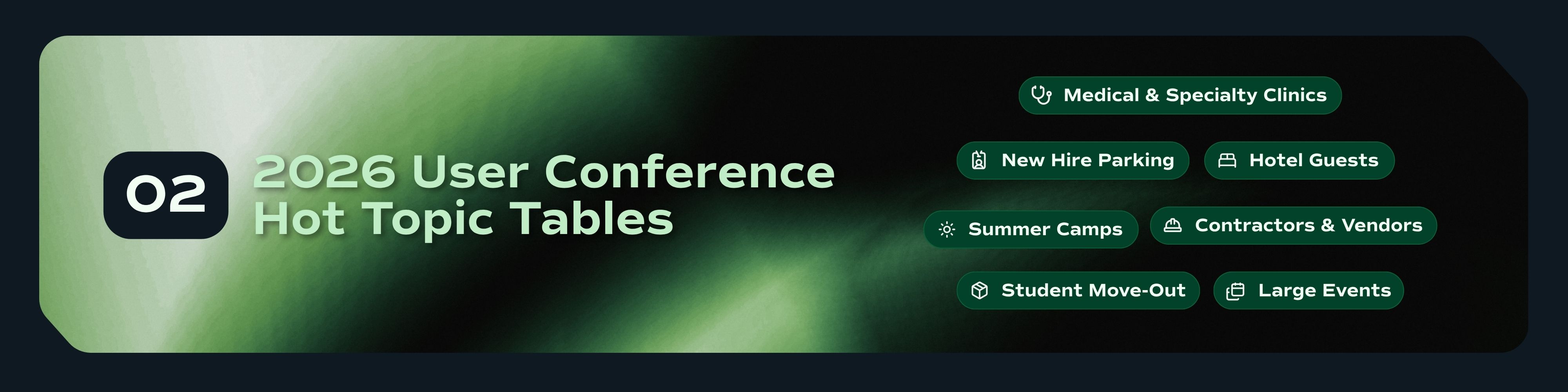
If you’ve ever managed parking near a university summer camp, you know the scene: parents double-parked in fire lanes, blocking curb access, and calling the parking office to complain about tickets. It’s a lose-lose.
Several campuses shared how Offstreet has completely changed this dynamic. Andrew Stewart’s team at UC Riverside charges camp sponsors just $1 per vehicle per day. The goal isn’t revenue, it’s accountability. Parents register in advance, get a designated lot, and arrive knowing exactly where to go. One campus moved 100% away from unenforced summer lots, reclaiming citation revenue that had been lost all summer long.
The key enabler: Offstreet’s multi-day, multi-time-slot feature, which lets a single transaction cover come-and-go access across multiple days and weeks.
UCLA’s David Axelrad shared how his campus hotel ties parking directly to the card on file at check-in, using Ocra as the POS. Revenue transfers to the parking department monthly. No separate transaction, no friction for the guest. University of Virginia’s Ryan Bruton runs a similar model, with 40–50 conferences and camps running simultaneously on campus, Offstreet handles guest parking permits for the on-campus hotel as well.
Multiple campuses have replaced paper scratch permits for new employees with Offstreet-issued onboarding permits. Josh Cantor at George Mason University issues a 10-day permit to every new hire, giving them time to settle in before committing to a full permit purchase. Donnie Johnson at WCU gives new hires one month free. After that first month, enforcement kicks in automatically.
The friction point: new hires often can’t purchase until they’re active in the HR system, which can lag by a week or more. Campuses are working around this with manual start-date handoffs from HR to parking.
Campuses are also using Offstreet to manage complex permit stacking. Josh Cantor and his team at George Mason University issues supplemental permits for service spots and housing staff on top of regular permits which were previously managed with physical hang tags that enforcement had to check manually. Now it’s all digital.
The common ground across all of these use cases: Offstreet's flexibility let's parking departments solve problems that were never in the original scope. The campuses getting the most value aren't just using it for parking, they're using it as an operations platform.